Buy conferencing.eu ?
We are moving the project
conferencing.eu .
Are you interested in purchasing the domain
conferencing.eu ?
domain@kv-gmbh.de · 0541-91531010
Buy conferencing.eu ?
What is NMR spectroscopy?
Nuclear Magnetic Resonance (NMR) spectroscopy is a powerful analytical technique used to study the structure and dynamics of molecules. It provides detailed information about the chemical environment, connectivity, and conformation of atoms within a molecule. By measuring the interactions of atomic nuclei with a magnetic field, NMR spectroscopy can elucidate the molecular structure of organic compounds, proteins, and other biomolecules. This technique is widely used in chemistry, biochemistry, and structural biology for research and drug discovery purposes. **
How is spectroscopy applied?
Spectroscopy is applied in various fields such as chemistry, physics, astronomy, and environmental science. In chemistry, it is used to identify and analyze the chemical composition of substances. In physics, it is used to study the interaction of electromagnetic radiation with matter. In astronomy, it is used to determine the composition, temperature, and motion of celestial objects. In environmental science, it is used to monitor air and water quality by analyzing the presence of pollutants. Overall, spectroscopy is a versatile tool for analyzing the properties of different materials and substances. **


Similar search terms for Spectroscopy
Top-Angebote
Products related to Spectroscopy:
-
Uplift Essentials Remote Pet Training & Communication Collar whiteImprove your relationship with your pet through precise, longrange communication. This Professional Remote Training Collar is specifically engineered for cats and small pets, offering an industryleading range of up to 3,300 ft. Designed to address...134,97 $*Shipping: 0,00 $Secure redirect to the provider
-
OEM "63"" Conference Table, Meeting Desk for 4-6 People, Solid Wood Office Table for Conference Room, Office, Collaboration Space"Great ideas don’t happen in isolation—they spark from collaboration, grow from discussion, and take shape around a table where voices are heard, creativity flows, and small teams come together to chase a common goal.289,99 $*Shipping: 0,00 $Secure redirect to the provider
-
"""Duckhorn The Discussion 2021 Red Wine - California""""""A complex medley of brambly red currants, black raspberry, fig compote & rose petals grace the nose. The palate is supple and velvety with powdery tannins bolstering age-ability. Extended barrel aging yields wonderful complexity with hints of..."191,99 $*Shipping: 0,00 $Secure redirect to the provider
-
Uplift Essentials Serene Motion Virtual Aquarium Lamp Serene Motion Virtual Aquarium Lamp"Bring the soothing magic of the underwater world to your tabletop with the Serene Motion Virtual Aquarium Lamp. This highdefinition desktop aquarium decorative light uses advanced ""movingpicture"" technology to create a mesmerizing, continuous swim..."82,97 $*Shipping: 0,00 $Secure redirect to the provider




-
Does anyone know anything about spectroscopy?
Spectroscopy is the study of the interaction between matter and electromagnetic radiation. It is used to analyze the composition, structure, and properties of materials by observing how they interact with different wavelengths of light. Spectroscopy has applications in various scientific fields, including chemistry, physics, astronomy, and environmental science. It is a powerful tool for identifying and characterizing substances, and it can provide valuable information about the behavior of atoms and molecules. **
-
What is spectroscopy and what is a spectrometer?
Spectroscopy is the study of the interaction between matter and electromagnetic radiation. It involves analyzing the way in which different materials absorb, emit, or scatter light, allowing scientists to identify and characterize substances based on their unique spectral signatures. A spectrometer is a device used to measure and analyze the spectrum of light emitted or absorbed by a substance. It works by separating the different wavelengths of light and measuring their intensity, allowing for the identification of specific elements or compounds based on their unique spectral fingerprints. Spectrometers are widely used in various scientific fields, including chemistry, physics, astronomy, and environmental science. **
-
How do I analyze a spectrum in spectroscopy?
To analyze a spectrum in spectroscopy, you first need to obtain the spectrum by passing light through a sample and measuring the absorption or emission of different wavelengths. Once you have the spectrum, you can analyze it by identifying the peaks and their corresponding wavelengths. You can then use this information to determine the chemical composition, concentration, and other properties of the sample. Additionally, you can compare the spectrum to reference spectra to help identify the compounds present in the sample. **
-
What are the types of vibrations in IR spectroscopy?
In IR spectroscopy, there are three main types of vibrations: stretching, bending, and combination. Stretching vibrations occur when the distance between two bonded atoms increases or decreases, while bending vibrations involve a change in the angle between two bonds. Combination vibrations are a combination of stretching and bending motions. These vibrations are characteristic of different functional groups and can be used to identify the presence of specific chemical bonds in a molecule. **

Where are the spectral lines located in ultraviolet-visible spectroscopy?
In ultraviolet-visible spectroscopy, the spectral lines are located in the ultraviolet and visible regions of the electromagnetic spectrum. The ultraviolet region typically ranges from 190 to 400 nm, while the visible region ranges from 400 to 800 nm. These spectral lines correspond to the absorption or emission of light by molecules, which can provide information about their electronic structure and chemical composition. **
What is the significance of spectroscopy in relation to NMR and IR?
Spectroscopy is significant in relation to NMR (nuclear magnetic resonance) and IR (infrared) because it allows scientists to study the interaction of matter with electromagnetic radiation. NMR spectroscopy is used to study the structure and dynamics of molecules by analyzing the behavior of atomic nuclei in a magnetic field. IR spectroscopy, on the other hand, is used to study the chemical composition and structure of molecules by analyzing their interaction with infrared radiation. Both techniques are essential in the fields of chemistry, biochemistry, and materials science for identifying and characterizing compounds. **
Top-Angebote
Products related to Spectroscopy:
-
OEM "31.5"" Round Conference Table, Modern Small Meeting Home Office Table, Discussion Office Table"Every workspace deserves a touch of elegance that balances professionalism with comfort—a space where ideas flow, conversations thrive, and every moment feels purposeful.188,78 $*Shipping: 0,00 $Secure redirect to the provider
-
Uplift Essentials Remote Pet Training & Communication Collar whiteImprove your relationship with your pet through precise, longrange communication. This Professional Remote Training Collar is specifically engineered for cats and small pets, offering an industryleading range of up to 3,300 ft. Designed to address...134,97 $*Shipping: 0,00 $Secure redirect to the provider
-
OEM "63"" Conference Table, Meeting Desk for 4-6 People, Solid Wood Office Table for Conference Room, Office, Collaboration Space"Great ideas don’t happen in isolation—they spark from collaboration, grow from discussion, and take shape around a table where voices are heard, creativity flows, and small teams come together to chase a common goal.289,99 $*Shipping: 0,00 $Secure redirect to the provider
-
What is NMR spectroscopy?
Nuclear Magnetic Resonance (NMR) spectroscopy is a powerful analytical technique used to study the structure and dynamics of molecules. It provides detailed information about the chemical environment, connectivity, and conformation of atoms within a molecule. By measuring the interactions of atomic nuclei with a magnetic field, NMR spectroscopy can elucidate the molecular structure of organic compounds, proteins, and other biomolecules. This technique is widely used in chemistry, biochemistry, and structural biology for research and drug discovery purposes. **
-
How is spectroscopy applied?
Spectroscopy is applied in various fields such as chemistry, physics, astronomy, and environmental science. In chemistry, it is used to identify and analyze the chemical composition of substances. In physics, it is used to study the interaction of electromagnetic radiation with matter. In astronomy, it is used to determine the composition, temperature, and motion of celestial objects. In environmental science, it is used to monitor air and water quality by analyzing the presence of pollutants. Overall, spectroscopy is a versatile tool for analyzing the properties of different materials and substances. **
-
Does anyone know anything about spectroscopy?
Spectroscopy is the study of the interaction between matter and electromagnetic radiation. It is used to analyze the composition, structure, and properties of materials by observing how they interact with different wavelengths of light. Spectroscopy has applications in various scientific fields, including chemistry, physics, astronomy, and environmental science. It is a powerful tool for identifying and characterizing substances, and it can provide valuable information about the behavior of atoms and molecules. **
-
What is spectroscopy and what is a spectrometer?
Spectroscopy is the study of the interaction between matter and electromagnetic radiation. It involves analyzing the way in which different materials absorb, emit, or scatter light, allowing scientists to identify and characterize substances based on their unique spectral signatures. A spectrometer is a device used to measure and analyze the spectrum of light emitted or absorbed by a substance. It works by separating the different wavelengths of light and measuring their intensity, allowing for the identification of specific elements or compounds based on their unique spectral fingerprints. Spectrometers are widely used in various scientific fields, including chemistry, physics, astronomy, and environmental science. **
Similar search terms for Spectroscopy
-
"""Duckhorn The Discussion 2021 Red Wine - California""""""A complex medley of brambly red currants, black raspberry, fig compote & rose petals grace the nose. The palate is supple and velvety with powdery tannins bolstering age-ability. Extended barrel aging yields wonderful complexity with hints of..."191,99 $*Shipping: 0,00 $Secure redirect to the provider
-
Uplift Essentials Serene Motion Virtual Aquarium Lamp Serene Motion Virtual Aquarium Lamp"Bring the soothing magic of the underwater world to your tabletop with the Serene Motion Virtual Aquarium Lamp. This highdefinition desktop aquarium decorative light uses advanced ""movingpicture"" technology to create a mesmerizing, continuous swim..."82,97 $*Shipping: 0,00 $Secure redirect to the provider
-
Uplift Essentials Virtual Motion Ocean Aquarium Lamp Virtual Motion Ocean Aquarium Lamp"Experience the tranquil beauty of the deep blue without the maintenance of a real tank with the Virtual Motion Ocean Aquarium Lamp. This creative decorative piece uses highdefinition ""moving picture"" technology to simulate a vibrant tropical reef,..."79,97 $*Shipping: 0,00 $Secure redirect to the provider
-
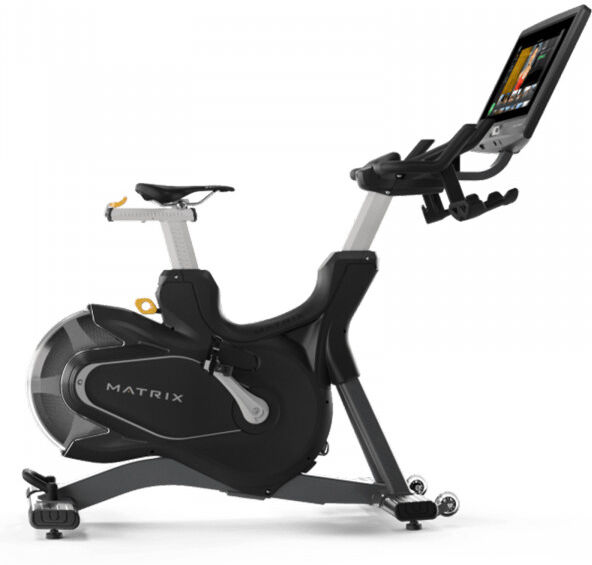
Matrix Virtual Training Cycle CXVTHE MATRIX VIRTUAL TRAINING CYCLE The Matrix Virtual Training Cycle is the purpose built bike for your cardio zone. Whether gym members are challenging themselves with exclusive workouts, enjoying streaming entertainment or taking on an immersive group class, the Virtual Training Cycle will...4794,00 £*Shipping: 0,00 £Secure redirect to the provider
-
How do I analyze a spectrum in spectroscopy?
To analyze a spectrum in spectroscopy, you first need to obtain the spectrum by passing light through a sample and measuring the absorption or emission of different wavelengths. Once you have the spectrum, you can analyze it by identifying the peaks and their corresponding wavelengths. You can then use this information to determine the chemical composition, concentration, and other properties of the sample. Additionally, you can compare the spectrum to reference spectra to help identify the compounds present in the sample. **
-
What are the types of vibrations in IR spectroscopy?
In IR spectroscopy, there are three main types of vibrations: stretching, bending, and combination. Stretching vibrations occur when the distance between two bonded atoms increases or decreases, while bending vibrations involve a change in the angle between two bonds. Combination vibrations are a combination of stretching and bending motions. These vibrations are characteristic of different functional groups and can be used to identify the presence of specific chemical bonds in a molecule. **
-
Where are the spectral lines located in ultraviolet-visible spectroscopy?
In ultraviolet-visible spectroscopy, the spectral lines are located in the ultraviolet and visible regions of the electromagnetic spectrum. The ultraviolet region typically ranges from 190 to 400 nm, while the visible region ranges from 400 to 800 nm. These spectral lines correspond to the absorption or emission of light by molecules, which can provide information about their electronic structure and chemical composition. **
-
What is the significance of spectroscopy in relation to NMR and IR?
Spectroscopy is significant in relation to NMR (nuclear magnetic resonance) and IR (infrared) because it allows scientists to study the interaction of matter with electromagnetic radiation. NMR spectroscopy is used to study the structure and dynamics of molecules by analyzing the behavior of atomic nuclei in a magnetic field. IR spectroscopy, on the other hand, is used to study the chemical composition and structure of molecules by analyzing their interaction with infrared radiation. Both techniques are essential in the fields of chemistry, biochemistry, and materials science for identifying and characterizing compounds. **
* All prices are inclusive of VAT and, if applicable, plus shipping costs. The offer information is based on the details provided by the respective shop and is updated through automated processes. Real-time updates do not occur, so deviations can occur in individual cases. ** Note: Parts of this content were created by AI.