Buy conferencing.eu ?
We are moving the project
conferencing.eu .
Are you interested in purchasing the domain
conferencing.eu ?
domain@kv-gmbh.de · 0541-91531010
Buy conferencing.eu ?
What are polygons?
Polygons are two-dimensional shapes that are made up of straight lines and enclosed by a set of vertices. They can have any number of sides, but must have at least three. Common examples of polygons include triangles, squares, rectangles, pentagons, hexagons, and octagons. Polygons are used in various mathematical and geometric applications, and are fundamental to understanding the properties of shapes and their relationships. **
What are triangles and polygons?
Triangles are three-sided polygons, while polygons are closed shapes with straight sides. Triangles are a specific type of polygon with three sides and three angles. Polygons can have any number of sides, as long as they are straight and the shape is closed. Both triangles and polygons are fundamental shapes in geometry and are used to study the properties of angles, sides, and area. **


Similar search terms for Polygons
Top-Angebote
Products related to Polygons:
-
OEM "31.5"" Round Conference Table, Modern Small Meeting Home Office Table, Discussion Office Table"Every workspace deserves a touch of elegance that balances professionalism with comfort—a space where ideas flow, conversations thrive, and every moment feels purposeful.188,78 $*Shipping: 0,00 $Secure redirect to the provider
-
Uplift Essentials Remote Pet Training & Communication Collar pinkImprove your relationship with your pet through precise, longrange communication. This Professional Remote Training Collar is specifically engineered for cats and small pets, offering an industryleading range of up to 3,300 ft. Designed to address...134,97 $*Shipping: 0,00 $Secure redirect to the provider
-
OEM "63"" Conference Table, Meeting Desk for 4-6 People, Solid Wood Office Table for Conference Room, Office, Collaboration Space"Great ideas don’t happen in isolation—they spark from collaboration, grow from discussion, and take shape around a table where voices are heard, creativity flows, and small teams come together to chase a common goal.289,99 $*Shipping: 0,00 $Secure redirect to the provider
-
"""Duckhorn The Discussion 2021 Red Wine - California""""""A complex medley of brambly red currants, black raspberry, fig compote & rose petals grace the nose. The palate is supple and velvety with powdery tannins bolstering age-ability. Extended barrel aging yields wonderful complexity with hints of..."191,99 $*Shipping: 0,00 $Secure redirect to the provider




-
How can I further reduce polygons?
You can further reduce polygons by using tools such as the "Decimate" modifier in 3D modeling software, which allows you to reduce the number of polygons while preserving the overall shape of the model. Additionally, you can manually optimize the topology of the model by merging vertices, removing unnecessary edge loops, and simplifying complex geometry. Another approach is to use automated retopology tools to create a lower-polygon version of the model while maintaining its overall structure and details. **
-
How can I reduce further polygons?
To reduce further polygons, you can try simplifying the geometry by removing unnecessary vertices or edges. This can be done by using tools like the simplify function in modeling software or manually editing the mesh to remove unnecessary details. Additionally, you can try using techniques like retopology to create a cleaner and more optimized mesh with fewer polygons. Finally, consider using LOD (Level of Detail) techniques to dynamically adjust the level of detail based on the distance of the object from the camera, reducing the number of polygons rendered at a given time. **
-
How do you calculate regular polygons?
To calculate the area of a regular polygon, you can use the formula: Area = (1/2) * apothem * perimeter, where the apothem is the distance from the center of the polygon to the midpoint of any side, and the perimeter is the total length of all the sides. To calculate the interior angle of a regular polygon, you can use the formula: Interior angle = (180 * (n - 2)) / n, where n is the number of sides. Finally, to calculate the exterior angle of a regular polygon, you can use the formula: Exterior angle = 360 / n, where n is the number of sides. **
-
What are polygons in video games?
Polygons in video games are the building blocks of 3D graphics. They are flat, two-dimensional shapes that are used to create the surfaces of 3D objects in the game world. These polygons are connected to form the overall shape of the object, and then textures and lighting are applied to give them a more realistic appearance. The more polygons used, the more detailed and complex the 3D models can be, but this also requires more processing power from the computer or gaming console. **

Does a subdivision surface create more polygons?
Yes, a subdivision surface does create more polygons. When a subdivision surface is applied to a model, it increases the number of polygons by subdividing the existing geometry and creating a smoother surface. This can result in a higher level of detail and a more organic shape, but it also increases the complexity of the model and can impact performance in some cases. **
How do you calculate polygons in math?
To calculate the area of a polygon in math, you can use the formula A = 1/2 * base * height for a triangle, A = length * width for a rectangle, or A = 1/2 * apothem * perimeter for a regular polygon. For irregular polygons, you can divide the shape into smaller, simpler shapes and calculate their individual areas, then sum them up to find the total area of the polygon. Additionally, you can use trigonometric functions to calculate the area of a polygon with known side lengths and angles. **
Top-Angebote
Products related to Polygons:
-
Logitech Spotlight Presentation Remote - SlateTop features: - Enjoy highly accurate control over your presentations - Highlight and magnify areas of interest - Compatible with Windows and Mac and a range of presentation apps - Up to three months of battery life and fast charging Enjoy highly accurate control The Logitech Spotlight Presentation Remote makes presenting easier thanks to highly accurate gesture controls that respond to your every movement. Spotlight works wirelessly so you can navigate slides and video content from up to 30 metres away. And with three programmable buttons you can rewind, pause, and fast forward slides effortlessly. Highlight and magnify An advanced pointer system lets you highlight and magnify to zoom in on areas on your slides – it's great for emphasising key points during your presentations. Use the highlight button to focus on a particular area that leaves the surrounding area in shade. Set your preferred pointer preferences using the Logitech presentation app. Compatible with Windows and Mac Spotlight is built to be versatile and compatible with almost any computer setup. It works on Windows and Apple Mac computers, and with a range of presentation applications including: Powerpoint, Keynote, PDFs, Google Slide and Prezi presentations. Up to three months of battery life Give your Spotlight a full charge using a USB-C charging cable and enjoy up to three months of battery life. Or benefit from fast charging. A one-minute charge provides up to three hours of presenting time. A full charge takes just 60 minutes. The device vibrates and the battery indicator glows red when it needs to be recharged. LOGITECH Spotlight Presentation Remote - Slate, Connection: Wireless 2.4 GHz, Up to 3 months battery life, USB rechargeable101,99 £*Shipping: 0,00 £Secure redirect to the provider
-
OEM "31.5"" Round Conference Table, Modern Small Meeting Home Office Table, Discussion Office Table"Every workspace deserves a touch of elegance that balances professionalism with comfort—a space where ideas flow, conversations thrive, and every moment feels purposeful.188,78 $*Shipping: 0,00 $Secure redirect to the provider
-
Uplift Essentials Remote Pet Training & Communication Collar pinkImprove your relationship with your pet through precise, longrange communication. This Professional Remote Training Collar is specifically engineered for cats and small pets, offering an industryleading range of up to 3,300 ft. Designed to address...134,97 $*Shipping: 0,00 $Secure redirect to the provider
-
What are polygons?
Polygons are two-dimensional shapes that are made up of straight lines and enclosed by a set of vertices. They can have any number of sides, but must have at least three. Common examples of polygons include triangles, squares, rectangles, pentagons, hexagons, and octagons. Polygons are used in various mathematical and geometric applications, and are fundamental to understanding the properties of shapes and their relationships. **
-
What are triangles and polygons?
Triangles are three-sided polygons, while polygons are closed shapes with straight sides. Triangles are a specific type of polygon with three sides and three angles. Polygons can have any number of sides, as long as they are straight and the shape is closed. Both triangles and polygons are fundamental shapes in geometry and are used to study the properties of angles, sides, and area. **
-
How can I further reduce polygons?
You can further reduce polygons by using tools such as the "Decimate" modifier in 3D modeling software, which allows you to reduce the number of polygons while preserving the overall shape of the model. Additionally, you can manually optimize the topology of the model by merging vertices, removing unnecessary edge loops, and simplifying complex geometry. Another approach is to use automated retopology tools to create a lower-polygon version of the model while maintaining its overall structure and details. **
-
How can I reduce further polygons?
To reduce further polygons, you can try simplifying the geometry by removing unnecessary vertices or edges. This can be done by using tools like the simplify function in modeling software or manually editing the mesh to remove unnecessary details. Additionally, you can try using techniques like retopology to create a cleaner and more optimized mesh with fewer polygons. Finally, consider using LOD (Level of Detail) techniques to dynamically adjust the level of detail based on the distance of the object from the camera, reducing the number of polygons rendered at a given time. **
Similar search terms for Polygons
-
OEM "63"" Conference Table, Meeting Desk for 4-6 People, Solid Wood Office Table for Conference Room, Office, Collaboration Space"Great ideas don’t happen in isolation—they spark from collaboration, grow from discussion, and take shape around a table where voices are heard, creativity flows, and small teams come together to chase a common goal.289,99 $*Shipping: 0,00 $Secure redirect to the provider
-
"""Duckhorn The Discussion 2021 Red Wine - California""""""A complex medley of brambly red currants, black raspberry, fig compote & rose petals grace the nose. The palate is supple and velvety with powdery tannins bolstering age-ability. Extended barrel aging yields wonderful complexity with hints of..."191,99 $*Shipping: 0,00 $Secure redirect to the provider
-
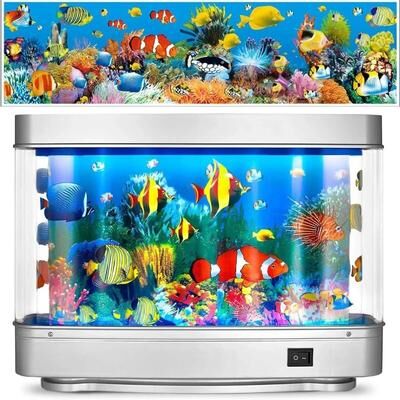
Uplift Essentials Serene Motion Virtual Aquarium Lamp Serene Motion Virtual Aquarium Lamp"Bring the soothing magic of the underwater world to your tabletop with the Serene Motion Virtual Aquarium Lamp. This highdefinition desktop aquarium decorative light uses advanced ""movingpicture"" technology to create a mesmerizing, continuous swim..."82,97 $*Shipping: 0,00 $Secure redirect to the provider
-
Uplift Essentials Virtual Motion Ocean Aquarium Lamp Virtual Motion Ocean Aquarium Lamp"Experience the tranquil beauty of the deep blue without the maintenance of a real tank with the Virtual Motion Ocean Aquarium Lamp. This creative decorative piece uses highdefinition ""moving picture"" technology to simulate a vibrant tropical reef,..."79,97 $*Shipping: 0,00 $Secure redirect to the provider
-
How do you calculate regular polygons?
To calculate the area of a regular polygon, you can use the formula: Area = (1/2) * apothem * perimeter, where the apothem is the distance from the center of the polygon to the midpoint of any side, and the perimeter is the total length of all the sides. To calculate the interior angle of a regular polygon, you can use the formula: Interior angle = (180 * (n - 2)) / n, where n is the number of sides. Finally, to calculate the exterior angle of a regular polygon, you can use the formula: Exterior angle = 360 / n, where n is the number of sides. **
-
What are polygons in video games?
Polygons in video games are the building blocks of 3D graphics. They are flat, two-dimensional shapes that are used to create the surfaces of 3D objects in the game world. These polygons are connected to form the overall shape of the object, and then textures and lighting are applied to give them a more realistic appearance. The more polygons used, the more detailed and complex the 3D models can be, but this also requires more processing power from the computer or gaming console. **
-
Does a subdivision surface create more polygons?
Yes, a subdivision surface does create more polygons. When a subdivision surface is applied to a model, it increases the number of polygons by subdividing the existing geometry and creating a smoother surface. This can result in a higher level of detail and a more organic shape, but it also increases the complexity of the model and can impact performance in some cases. **
-
How do you calculate polygons in math?
To calculate the area of a polygon in math, you can use the formula A = 1/2 * base * height for a triangle, A = length * width for a rectangle, or A = 1/2 * apothem * perimeter for a regular polygon. For irregular polygons, you can divide the shape into smaller, simpler shapes and calculate their individual areas, then sum them up to find the total area of the polygon. Additionally, you can use trigonometric functions to calculate the area of a polygon with known side lengths and angles. **
* All prices are inclusive of VAT and, if applicable, plus shipping costs. The offer information is based on the details provided by the respective shop and is updated through automated processes. Real-time updates do not occur, so deviations can occur in individual cases. ** Note: Parts of this content were created by AI.