Buy conferencing.eu ?
We are moving the project
conferencing.eu .
Are you interested in purchasing the domain
conferencing.eu ?
domain@kv-gmbh.de · 0541-91531010
Buy conferencing.eu ?
What are harmonic oscillations?
Harmonic oscillations are repetitive back-and-forth movements or vibrations that follow a specific pattern. They are characterized by a sinusoidal or wave-like motion, where the displacement of the oscillating object from its equilibrium position is proportional to the restoring force acting on it. Examples of harmonic oscillations include the swinging of a pendulum, the motion of a mass-spring system, and the vibrations of a guitar string. These oscillations are important in many areas of physics and engineering, as they can be used to describe and analyze various natural and mechanical systems. **
How do damped oscillations work?
Damped oscillations occur when an external force or frictional resistance acts upon a vibrating system, causing the amplitude of the oscillations to decrease over time. This damping effect gradually reduces the energy of the system, resulting in the oscillations eventually coming to a stop. The rate at which the oscillations decay is determined by the damping coefficient, with higher damping leading to faster decay. Damped oscillations are commonly observed in various systems, such as springs and pendulums, where energy is gradually dissipated due to external factors. **


Similar search terms for Oscillations
Top-Angebote
Products related to Oscillations:
-
Uplift Essentials Remote Pet Training & Communication Collar pinkImprove your relationship with your pet through precise, longrange communication. This Professional Remote Training Collar is specifically engineered for cats and small pets, offering an industryleading range of up to 3,300 ft. Designed to address...134,97 $*Shipping: 0,00 $Secure redirect to the provider
-
OEM "63"" Conference Table, Meeting Desk for 4-6 People, Solid Wood Office Table for Conference Room, Office, Collaboration Space"Great ideas don’t happen in isolation—they spark from collaboration, grow from discussion, and take shape around a table where voices are heard, creativity flows, and small teams come together to chase a common goal.289,99 $*Shipping: 0,00 $Secure redirect to the provider
-
"""Duckhorn The Discussion 2021 Red Wine - California""""""A complex medley of brambly red currants, black raspberry, fig compote & rose petals grace the nose. The palate is supple and velvety with powdery tannins bolstering age-ability. Extended barrel aging yields wonderful complexity with hints of..."191,99 $*Shipping: 0,00 $Secure redirect to the provider
-
Uplift Essentials Virtual Motion Ocean Aquarium Lamp Virtual Motion Ocean Aquarium Lamp"Experience the tranquil beauty of the deep blue without the maintenance of a real tank with the Virtual Motion Ocean Aquarium Lamp. This creative decorative piece uses highdefinition ""moving picture"" technology to simulate a vibrant tropical reef,..."79,97 $*Shipping: 0,00 $Secure redirect to the provider




-
What are resonance-driven oscillations?
Resonance-driven oscillations occur when a system is subjected to an external force at its natural frequency, causing it to oscillate with increasing amplitude. This phenomenon is known as resonance, where the energy of the external force is transferred efficiently to the system, leading to large oscillations. Resonance-driven oscillations can be observed in various systems, such as mechanical, electrical, and acoustic systems, and are important in understanding the behavior of these systems under different conditions. **
-
How do you draw oscillations?
To draw oscillations, you can start by plotting a sinusoidal function on a graph. The function can be in the form of y = A*sin(Bx + C) or y = A*cos(Bx + C), where A is the amplitude, B is the frequency, and C is the phase shift. You can then plot the points on the graph by plugging in different values of x to see how the function oscillates. Additionally, you can use a ruler to connect the points to create a smooth oscillation curve. **
-
How can sinusoidal oscillations be modeled?
Sinusoidal oscillations can be modeled using mathematical equations that describe the amplitude, frequency, and phase of the oscillation. The most common way to model sinusoidal oscillations is through a sine or cosine function, such as y = A*sin(2πft + φ), where A is the amplitude, f is the frequency, t is the time, and φ is the phase shift. By adjusting these parameters, we can accurately represent the behavior of sinusoidal oscillations in various systems and phenomena. Additionally, sinusoidal oscillations can also be modeled using differential equations in the context of dynamic systems analysis. **
-
What are examples of damped oscillations?
Examples of damped oscillations include a swinging pendulum in a viscous fluid, a car's suspension system responding to bumps on the road, and the motion of a spring-mass system with air resistance. In each case, the oscillations gradually decrease in amplitude over time due to the dissipative forces present, such as friction or air resistance. The damping effect causes the system to eventually come to rest at its equilibrium position. **

What are the trigonometric functions in oscillations?
In oscillations, the trigonometric functions commonly used are sine and cosine functions. These functions describe the relationship between the angle of rotation and the position of an object undergoing oscillatory motion. The sine function represents the vertical component of the motion, while the cosine function represents the horizontal component. By using these trigonometric functions, we can analyze and predict the behavior of oscillatory systems. **
Does a wave consist of multiple oscillations?
Yes, a wave consists of multiple oscillations. In physics, a wave is a disturbance that travels through a medium, transferring energy without transferring matter. This disturbance causes particles in the medium to oscillate back and forth, creating a pattern of repeated motion. Therefore, a wave is made up of multiple oscillations as it propagates through the medium. **
Top-Angebote
Products related to Oscillations:
-
OEM "31.5"" Round Conference Table, Modern Small Meeting Home Office Table, Discussion Office Table"Every workspace deserves a touch of elegance that balances professionalism with comfort—a space where ideas flow, conversations thrive, and every moment feels purposeful.188,78 $*Shipping: 0,00 $Secure redirect to the provider
-
Uplift Essentials Remote Pet Training & Communication Collar pinkImprove your relationship with your pet through precise, longrange communication. This Professional Remote Training Collar is specifically engineered for cats and small pets, offering an industryleading range of up to 3,300 ft. Designed to address...134,97 $*Shipping: 0,00 $Secure redirect to the provider
-
OEM "63"" Conference Table, Meeting Desk for 4-6 People, Solid Wood Office Table for Conference Room, Office, Collaboration Space"Great ideas don’t happen in isolation—they spark from collaboration, grow from discussion, and take shape around a table where voices are heard, creativity flows, and small teams come together to chase a common goal.289,99 $*Shipping: 0,00 $Secure redirect to the provider
-
What are harmonic oscillations?
Harmonic oscillations are repetitive back-and-forth movements or vibrations that follow a specific pattern. They are characterized by a sinusoidal or wave-like motion, where the displacement of the oscillating object from its equilibrium position is proportional to the restoring force acting on it. Examples of harmonic oscillations include the swinging of a pendulum, the motion of a mass-spring system, and the vibrations of a guitar string. These oscillations are important in many areas of physics and engineering, as they can be used to describe and analyze various natural and mechanical systems. **
-
How do damped oscillations work?
Damped oscillations occur when an external force or frictional resistance acts upon a vibrating system, causing the amplitude of the oscillations to decrease over time. This damping effect gradually reduces the energy of the system, resulting in the oscillations eventually coming to a stop. The rate at which the oscillations decay is determined by the damping coefficient, with higher damping leading to faster decay. Damped oscillations are commonly observed in various systems, such as springs and pendulums, where energy is gradually dissipated due to external factors. **
-
What are resonance-driven oscillations?
Resonance-driven oscillations occur when a system is subjected to an external force at its natural frequency, causing it to oscillate with increasing amplitude. This phenomenon is known as resonance, where the energy of the external force is transferred efficiently to the system, leading to large oscillations. Resonance-driven oscillations can be observed in various systems, such as mechanical, electrical, and acoustic systems, and are important in understanding the behavior of these systems under different conditions. **
-
How do you draw oscillations?
To draw oscillations, you can start by plotting a sinusoidal function on a graph. The function can be in the form of y = A*sin(Bx + C) or y = A*cos(Bx + C), where A is the amplitude, B is the frequency, and C is the phase shift. You can then plot the points on the graph by plugging in different values of x to see how the function oscillates. Additionally, you can use a ruler to connect the points to create a smooth oscillation curve. **
Similar search terms for Oscillations
-
"""Duckhorn The Discussion 2021 Red Wine - California""""""A complex medley of brambly red currants, black raspberry, fig compote & rose petals grace the nose. The palate is supple and velvety with powdery tannins bolstering age-ability. Extended barrel aging yields wonderful complexity with hints of..."191,99 $*Shipping: 0,00 $Secure redirect to the provider
-
Uplift Essentials Virtual Motion Ocean Aquarium Lamp Virtual Motion Ocean Aquarium Lamp"Experience the tranquil beauty of the deep blue without the maintenance of a real tank with the Virtual Motion Ocean Aquarium Lamp. This creative decorative piece uses highdefinition ""moving picture"" technology to simulate a vibrant tropical reef,..."79,97 $*Shipping: 0,00 $Secure redirect to the provider
-
Uplift Essentials Serene Motion Virtual Aquarium Lamp Serene Motion Virtual Aquarium Lamp"Bring the soothing magic of the underwater world to your tabletop with the Serene Motion Virtual Aquarium Lamp. This highdefinition desktop aquarium decorative light uses advanced ""movingpicture"" technology to create a mesmerizing, continuous swim..."82,97 $*Shipping: 0,00 $Secure redirect to the provider
-
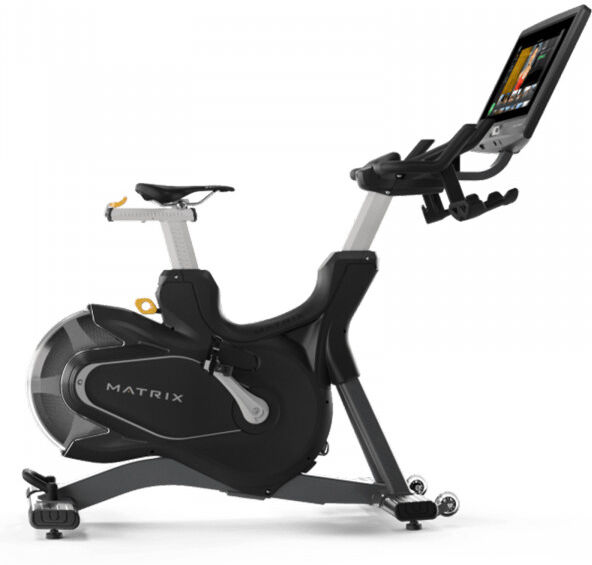
Matrix Virtual Training Cycle CXVTHE MATRIX VIRTUAL TRAINING CYCLE The Matrix Virtual Training Cycle is the purpose built bike for your cardio zone. Whether gym members are challenging themselves with exclusive workouts, enjoying streaming entertainment or taking on an immersive group class, the Virtual Training Cycle will...4794,00 £*Shipping: 0,00 £Secure redirect to the provider
-
How can sinusoidal oscillations be modeled?
Sinusoidal oscillations can be modeled using mathematical equations that describe the amplitude, frequency, and phase of the oscillation. The most common way to model sinusoidal oscillations is through a sine or cosine function, such as y = A*sin(2πft + φ), where A is the amplitude, f is the frequency, t is the time, and φ is the phase shift. By adjusting these parameters, we can accurately represent the behavior of sinusoidal oscillations in various systems and phenomena. Additionally, sinusoidal oscillations can also be modeled using differential equations in the context of dynamic systems analysis. **
-
What are examples of damped oscillations?
Examples of damped oscillations include a swinging pendulum in a viscous fluid, a car's suspension system responding to bumps on the road, and the motion of a spring-mass system with air resistance. In each case, the oscillations gradually decrease in amplitude over time due to the dissipative forces present, such as friction or air resistance. The damping effect causes the system to eventually come to rest at its equilibrium position. **
-
What are the trigonometric functions in oscillations?
In oscillations, the trigonometric functions commonly used are sine and cosine functions. These functions describe the relationship between the angle of rotation and the position of an object undergoing oscillatory motion. The sine function represents the vertical component of the motion, while the cosine function represents the horizontal component. By using these trigonometric functions, we can analyze and predict the behavior of oscillatory systems. **
-
Does a wave consist of multiple oscillations?
Yes, a wave consists of multiple oscillations. In physics, a wave is a disturbance that travels through a medium, transferring energy without transferring matter. This disturbance causes particles in the medium to oscillate back and forth, creating a pattern of repeated motion. Therefore, a wave is made up of multiple oscillations as it propagates through the medium. **
* All prices are inclusive of VAT and, if applicable, plus shipping costs. The offer information is based on the details provided by the respective shop and is updated through automated processes. Real-time updates do not occur, so deviations can occur in individual cases. ** Note: Parts of this content were created by AI.